


Another part of getting along with people is understanding the idea of “personal space.” The image shows a comfortable amount of personal space. Being too close can be a problem. When someone says, “he got in his face,” it usually means there was a argument—not a pleasant conversation.
How close or distant you are to a person sends a signal. If you are standing very close to another person—and you do not have to be—the other person might feel threatened by you. However, if you are standing too far away it will likely be difficult to start and maintain a conversation. A good distance for a friendly conversation is between 1.5 feet and 4 feet. This is the “personal space.” For people you’re dating and close family, it’s OK to get closer.
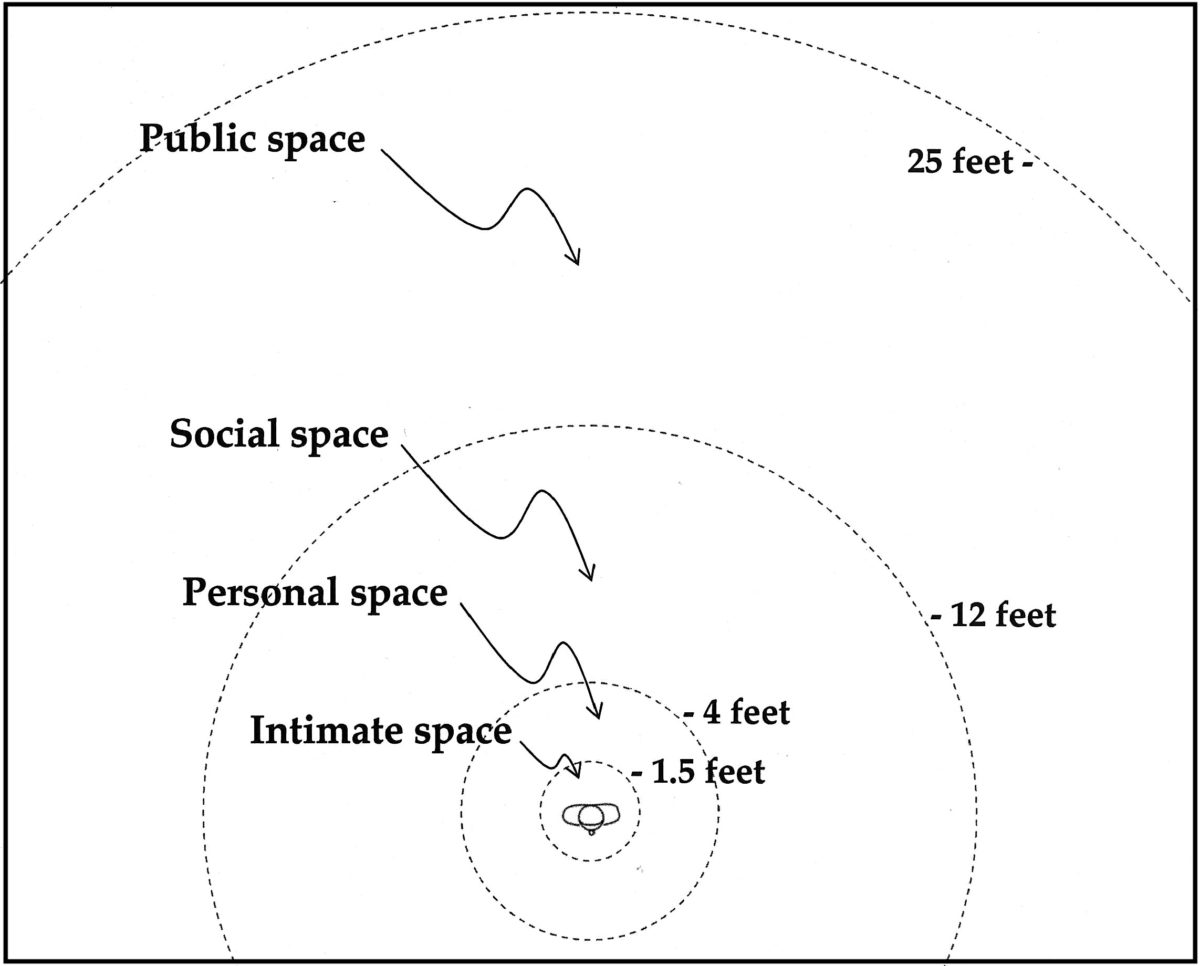
There are expectations for how much personal space a person keeps between them and another person. The amount of space is different depending on the situation (work, school, party, sporting event) and the other person (a friend, stranger, parent, girlfriend or boyfriend). It can be difficult to use the right distance, but you can keep an eye out for the nonverbal cues that another person sends you.
Personal Space and Social Behavior

In our country, we typically don’t touch other people unless they are close family or friends. Unexpected touching and getting too close can make others feel uncomfortable. For example, most people prefer having someone say “excuse me” to get their attention rather than being tapped on the shoulder.
Touching and Zones of the Body
People are put on guard if someone is within touching distance of them. If you need to touch someone to get their attention, it should be light, brief, and on the arm, shoulder, or back. A harder touch or touching anywhere other than the back or arm is inappropriate and might result in an angry reaction.
Try This: Ask your parents or someone else you trust to monitor (keep track) of your use of personal space and touching in public situations over the next week. Have them write down when you did a good job and times when they think you could change your behavior to make things more comfortable.