Teens often do not get enough sleep and many are sleep deprived. Most teens need around 9 hours of sleep to be fully rested; yet most get less than 8 hours of sleep each night. During recovery teens often need more sleep to feel rested. You may need to nap.
If you are tired — you should sleep, unless napping after school interferes with your ability to sleep at night and then get up for school the next day.
Sleep Is Important for Everything
If you don’t get enough sleep, your symptoms after TBI may feel worse. You may feel rundown and tired, and have trouble concentrating. You may even be too tired to do your daily activities. However, you might not notice the changes in your mood that affect you and those around you. Not getting enough sleep causes us to feel grumpy, moody, and impatient.
It’s not just how long you’re in bed that counts, but the quality of sleep you get while lying there. If you wake up a lot during the night, this can affect your daytime energy as much as no sleep at all. You can improve the quality of your sleep by setting up regular sleeping patterns, always going to bed and getting up around the same time every day — weekends included.
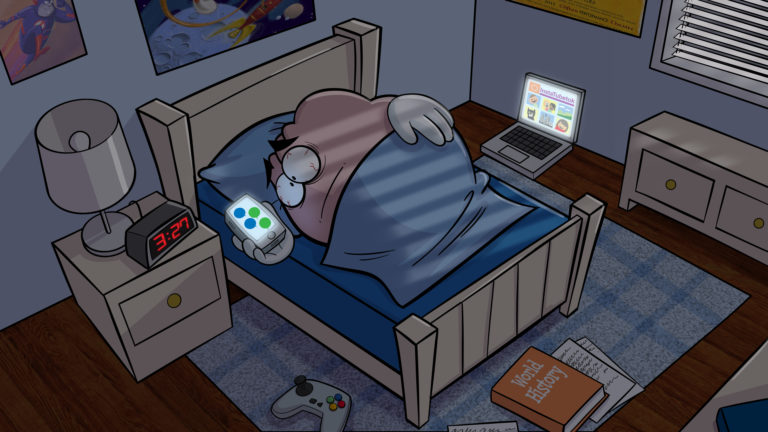
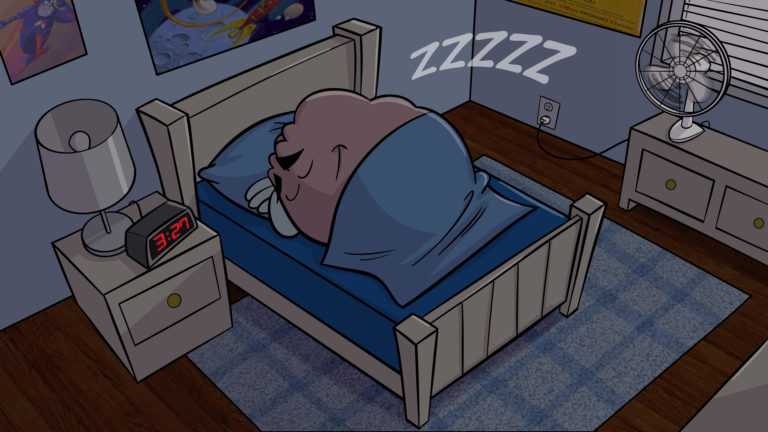
What could be improved in this scene?
Sleep Problems and Brain Injury
Teens with brain injuries are already at risk for difficulties with attention, memory, and short tempers — sleep problems can make these problems worse. For some teens, this can be overwhelming and cause them to withdraw and sleep even more. Sometimes when you are worried or feeling sad it is hard to fall asleep, stay asleep, or feel rested when it is time to get up.
After a brain injury the brain may have a hard time controlling sleep patterns. For example, you may have a hard time getting to sleep or staying asleep.
What’s changed? (Flip back and forth.)
Teens may:
Find they need extra sleep.
Have a hard time falling asleep or staying asleep.
Need to ease back into activities.
Feel “overloaded” or exhausted after school or after a few classes.
Require extra time to get up and going in the morning.
Be extra sensitive to noise or distractions.
Be more irritable when tired.
Struggle more with memory when tired.
Watch Sarah talk about sleep.
How to Get a Good Night’s Sleep
Don’t go to bed hungry or full — either will keep you from sleeping as well.
Use your bed only for sleep — avoid using it to study, eat, chat with friends, etc.
Create the right environment — make sure your room is dark and quiet, and the right temperature. Most experts agree cooler temperatures work best. If you’re bothered by noise, use a fan to create “white noise”.
Don’t nap if it interferes with sleeping through the night.
Reduce stress — make a list of things that you need to do. Once your tasks are down on paper, your mind will be free to relax. Use relaxation techniques such as imagining a peaceful scene, muscle relaxation, relaxed breathing, and other ways of reducing your stress.
Eat (lightly) to induce sleep. Although you shouldn’t eat too much right before going to sleep, certain foods promote sleep, such as milk, turkey, tuna, bread and cereal. Avoid caffeine, alcohol, and large amounts of sugar.
Take a warm shower or bath.
Read a book or do some other quiet activity that relaxes you.
Set your body’s clock. Go to sleep and get up around the same time every day to set your body’s rhythm.