

Why Nagging Doesn’t Work
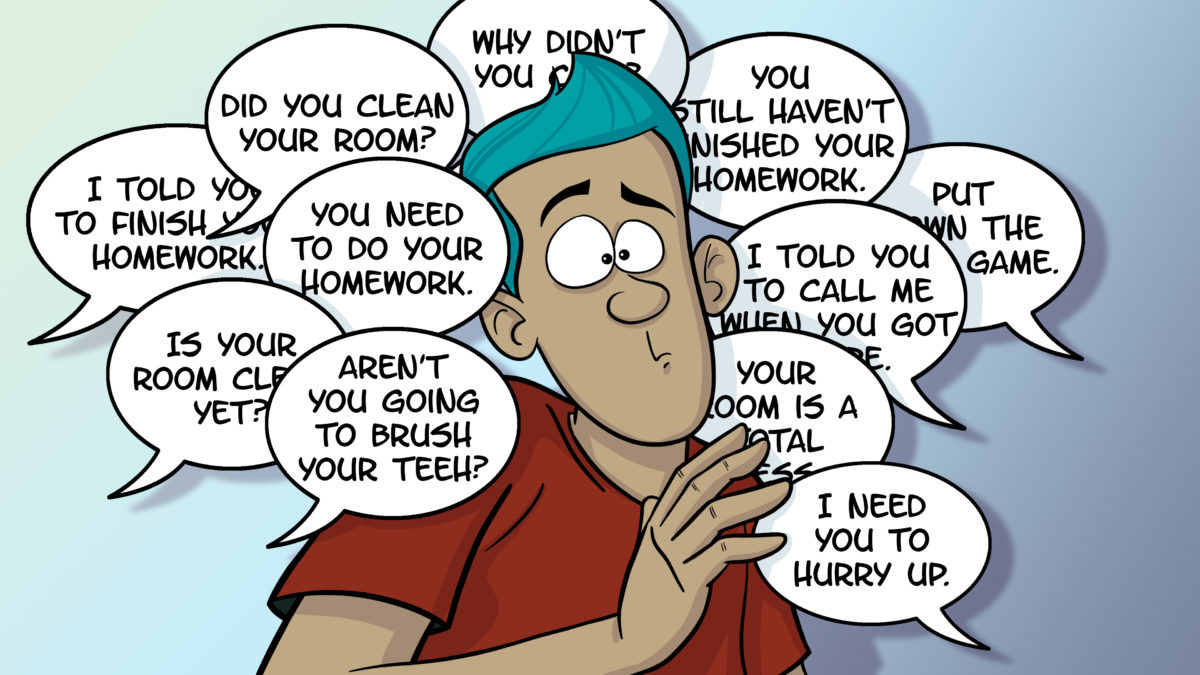
Have you ever become aware of a noise after it has stopped? We automatically tune out monotonous sounds. When we are bombarded with these unwanted sounds our brain deals with this by not registering the sounds—after a period of time we are no longer aware of the the sound of construction going on, or the buzzing of fluorescent lights. We generally aren’t aware of blocking out the sounds—it’s just our automatic way of coping. We tend to cope with nagging in a similar fashion, although we are generally more aware that we are doing it. But the response is the same—to block out the unwanted noise.
How to Avoid Nagging
Nagging sometimes becomes a habit for parents. We want our kids to do well in life and think that things might fall apart if we don’t constantly remind them of what to do. However, this is generally not helpful. Nagging can negatively impact teens’ self-esteem as they may feel that their parents don’t see them as capable. Teens may not be responding to parents nagging because their approach is different or they don’t see the situation the same as their parents do. So, instead of nagging it is important to TALK with your teen in order to understand their perspective. When you feel the urge to start nagging—think of this as a cue to start talking! However, if you are feeling too frustrated to talk, take a few minutes to calm down or plan to talk about the issue when you are calm.