

In addition to a brain injury, there are four other types of problems that can lead to sleep difficulties.
Physical/Emotional Issues
Some sleep problems are the result of physical or emotional issues such as:
- Tension, worry or anxiety
- Depression
- Brain injury
- Physical problems (enlarged tonsils, obesity, etc)
Common symptoms of untreated sleep disorders are:
- Snoring
- Being out of breath when you wake up
- Feeling sleepy during the day
- Having unpleasant (tingly) feelings in your legs and urges to move your legs to make it stop, especially at night
These are symptoms of the most common sleep disorders. If you are concerned, please talk to your doctor as soon as possible!
Some can be the results of medical conditions, pain, or medications:
- Pain or discomfort from medical problems or injuries
- Taking decongestants (like sinus or cold medicine)
- Taking steroids
- Some medicines for asthma or depression can cause sleep problems
Life Events
Some sleep problems are the result of things that happen in your life, such as:
- Increase in school stress
- Loss of a loved one
- Hospitalization
- Sleeping in a strange place
- Acute pain
- Sudden change of schedule
Personal Habits
There are many common sleep habits that you may not realize are keeping you from sleeping. Knowing the cause of the problem is the best way to start treating it.
Bad Sleep Habits:
- Irregular sleep habits
- Drinking a lot of caffeine throughout the day keeps you awake during the day and at night
- Staying in bed tossing and turning trains your body to stay awake rather than sleeping
- Having distractions in the room (for example light, sound, or a mess) keeps you from being able to relax and prepare to sleep.
- Sleeping more than 2 hours past your normal wake up time-disrupts your sleep routine and makes it harder to fall asleep at your normal bedtime
- Eating a big bedtime snack
- Using drugs, abusing alcohol, or heavy smoking
Environment Issues:
- The temperature in your room is too hot or too cool
- Your room is too bright or noisy
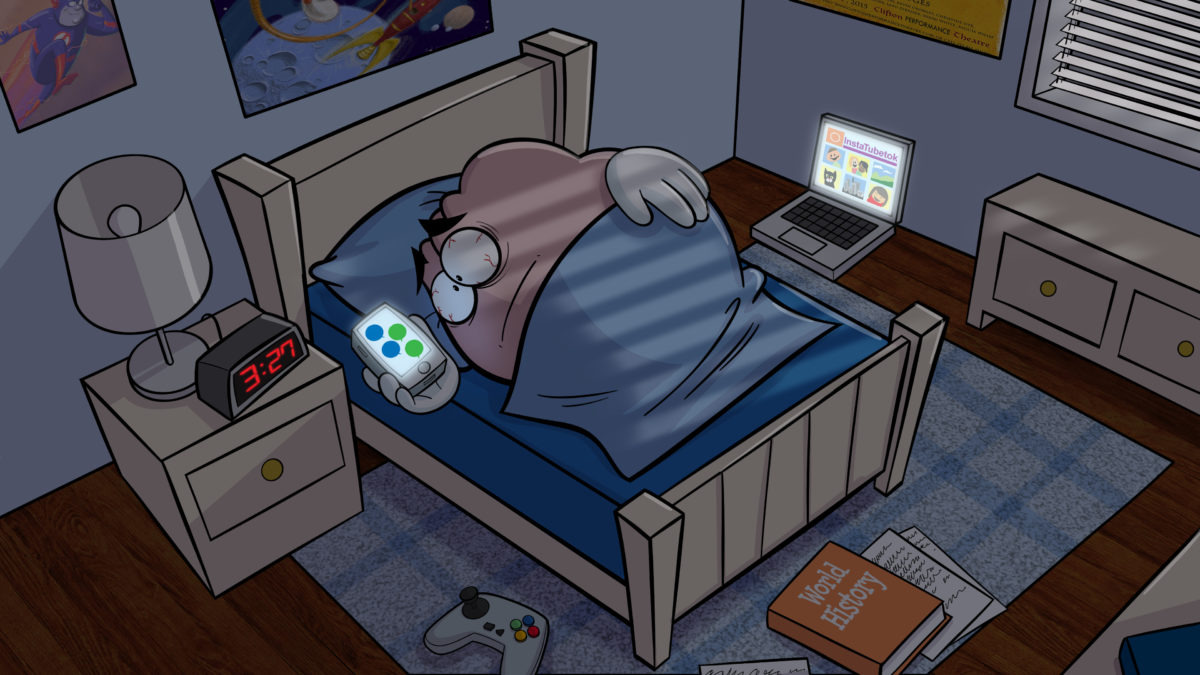
- Distractions in your room like TV, computer, cell phone, video games
- Using your bedroom for activities other than sleeping (doing homework, playing videogames, or watching TV in bed).