

Most people are visual learners, and so it’s no surprise that pictures enhance memory as well.
When pictures are not given, make your own.
If you have to remember that certain things go together, imagine a picture or scene that includes all of these items. Don’t just have the items next to each other in your picture, imagine them interacting in some way.
If you need to remember that Alexander Graham Bell invented the telephone in 1876, you could imagine a picture of him speaking the date into the phone. That way, when you need to recall who invented the telephone, you can remember your picture and see that is was Bell in 1876, because these are elements in your picture.
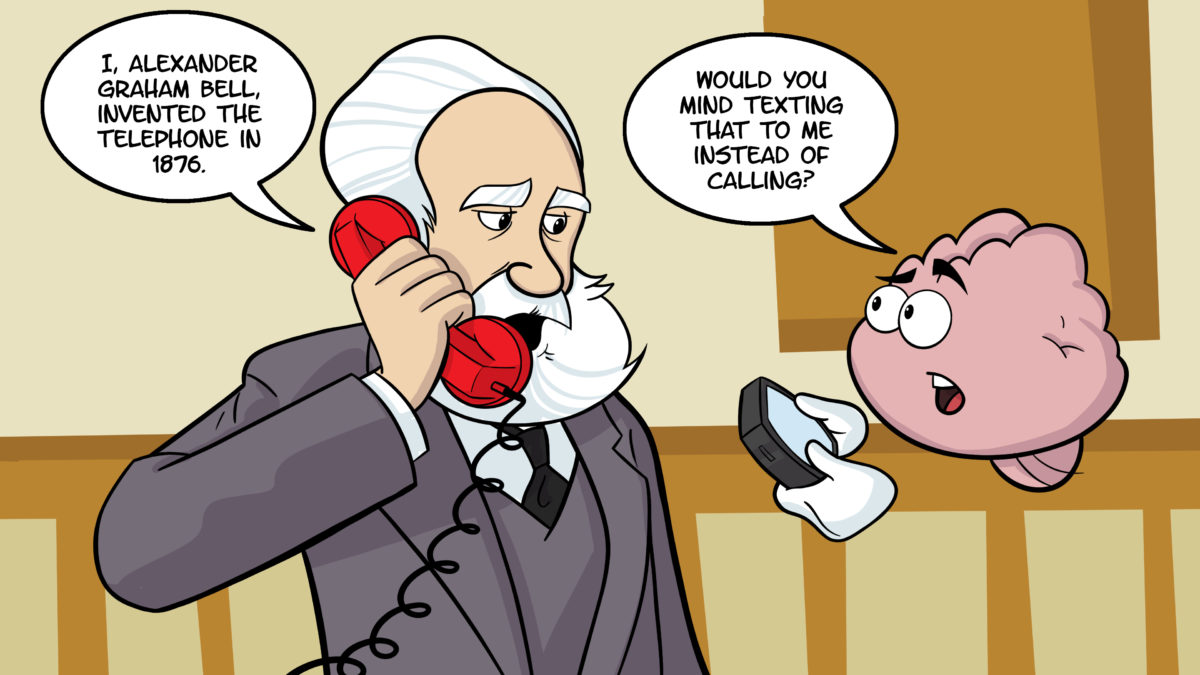
It doesn’t matter if the scene you imagine is funny or unrealistic. Add detail, you’ll remember it better!
You can use imagery to help you remember vocabulary definitions too.
Keyword Strategy
A keyword is a word that sounds like the new word and is easily imagined. Create a keyword, then create a picture of the keyword and the definition doing something together.
For example, you want to learn that barrister is another word for lawyer. A good keyword for barrister is bear. Then imagine a picture of a bear dressed as a lawyer, arguing in court. You want to remember this picture, so that when you hear the word barrister, you first think of the keyword, bear, and remember what the bear was doing in the picture. Then you will remember that barrister means lawyer!
Put it in a Song
Another tool to help with memory is to put information into a song. For example, we teach kids their ABC’s by teaching them the alphabet song.
We tend to remember songs, even after a long period of time. So using those can help you remember things for tests. You can take a song you know and change the words for the things you need to remember.
For example: to remember the bones in your body- you may have heard “Your leg bone is connected to your hip bone, Your hip bone is connected to your…”